Submissions (24)

Hunter's avatar
Hunter3/13/2025

$4

A full guide to anyone who want to start scanning those mushrooms enjoy :

Verified
mypets's avatar
mypets3/13/2025

$4

First, you need the Odyssey expansion in order to get started with exobiology. With regard to the ship, I recommend one that has a good jump range and is small or medium-sized. I really like the Diamondback Explorer, but there are other options such as the Asp Explorer, Krait Phantom... In addition to the choice of ship, it's also very important to equip it with a Full Spectrum Scanner and a Detailed Surface Scanner, because it's through these that you'll be able to identify areas with life on other planets and map the surface; as well as the SRV, which helps you to be faster when scanning for life forms (these pieces of equipment aren't mandatory, but they help a lot!). The Artemis suit is also essential, it is equipped with the Genetic Sampler, the only device that can scan for exobiological life forms.

Once you've done that, you can set off on an adventure in search of exobiological forms. Choose your direction and start searching, remembering that the initial search begins inside the ship with the equipment you've acquired.

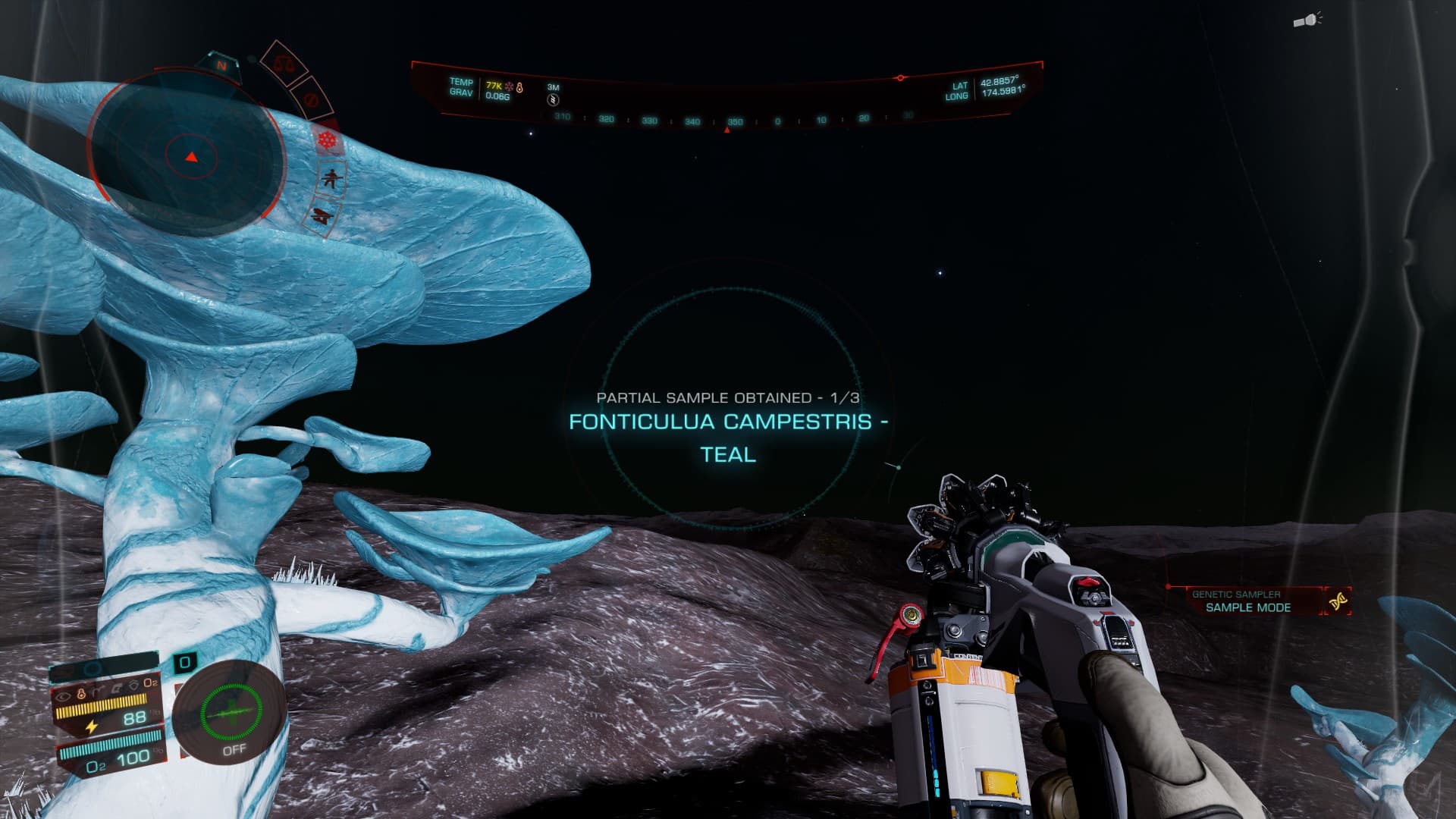
Once you've located the element and landed the ship, you can go on foot or with the SRV looking for life forms, and the scanner will show you the elements that can be scanned. It's important to remember that there are 3 different samples for each species and they must be at a certain distance from each other. When you've finished collecting, you can sell your data to Vista Genomics, with the rewards varying according to the rarity of each specimen. It's good to know that if you're the first to discover a life form, your reward will be much greater! To achieve this, I recommend searching in areas further away from the center, because the further away you go, the greater the chance of finding unexplored places. These are the initial tips, I believe that over time everyone will see how it works best for them.

Caenyx's avatar
Caenyx3/13/2025

$4

There’s a few things you will need; a small/medium ship preferably for ease of landing in some difficult terrains, a DSS, a fuel scoop, an SRV and an Artemis suit of course.
Start by jumping to a system, then head into the system map. If it’s already been scanned, you can easily check which landable planets have biological signatures (the more the better). If it hasn’t been scanned yet, you can score some extra credits and boost your explorer rank by scanning the system and its planets beforehand.
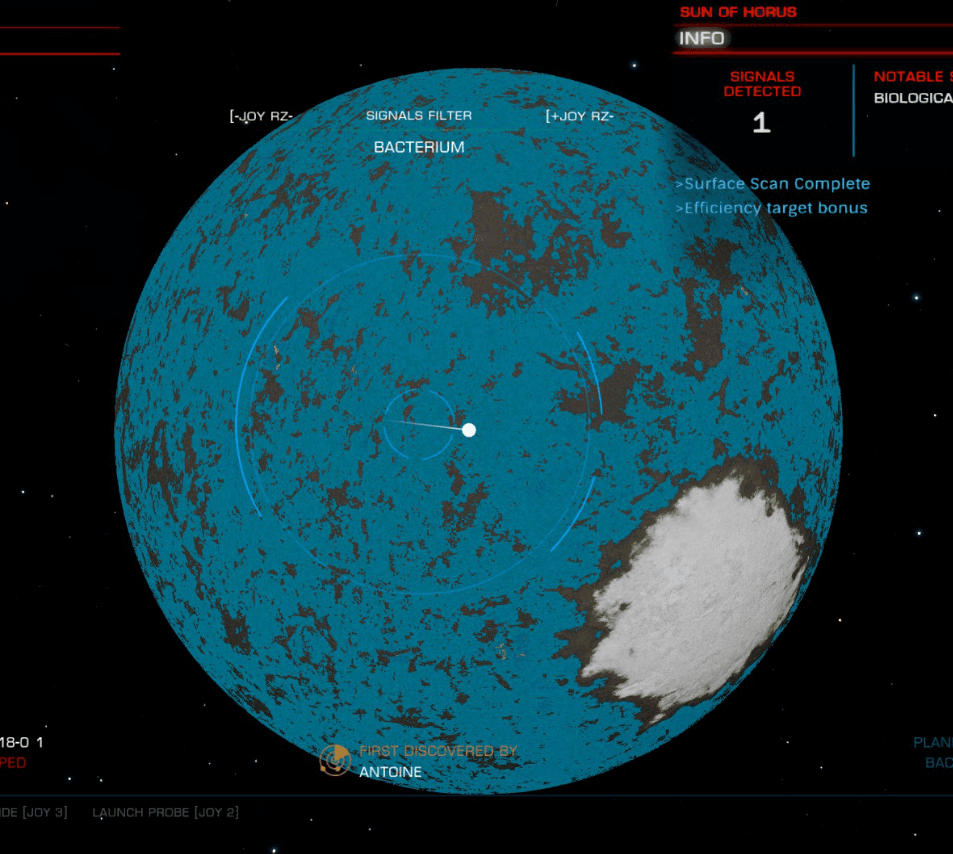
When you find a promising planet, scan it with the DSS. The lighter the blue, the more flora will be in that area. In most cases, you can overlap the flora to group them into one location. Keep in mind that certain species may only grow in specific locations or at certain altitudes.
To fully scan one species, you need to do three scans. Don’t start scanning another species until you’ve finished the current one, or you’ll lose your progress. Keep repeating the process until you’re ready to head back home. The scans will still be saved, but you won’t get any credits or rank for it if you die though so becareful.
Once you’re done, head to Vista Genomics at almost any station and sell all your exploration data and codex discoveries to claim your rewards.

Osiliran's avatar
Osiliran3/12/2025

$4

For my submission into this bounty, and having never done exobiology before, I wanted to offer my perspective as a complete beginner and some approaches I took to get some samples under my belt.

The game and outside sources do a great job of explaining the essential tools needed; the genetic sampling tool that comes with an Artemis suit, the Full Spectrum System Scanner (FSSS) that comes with the ship by default, and a Detailed Surface Scanner (DDS) that must be purchased as a separate ship module. A ship with a small footprint for easy landing is a plus.

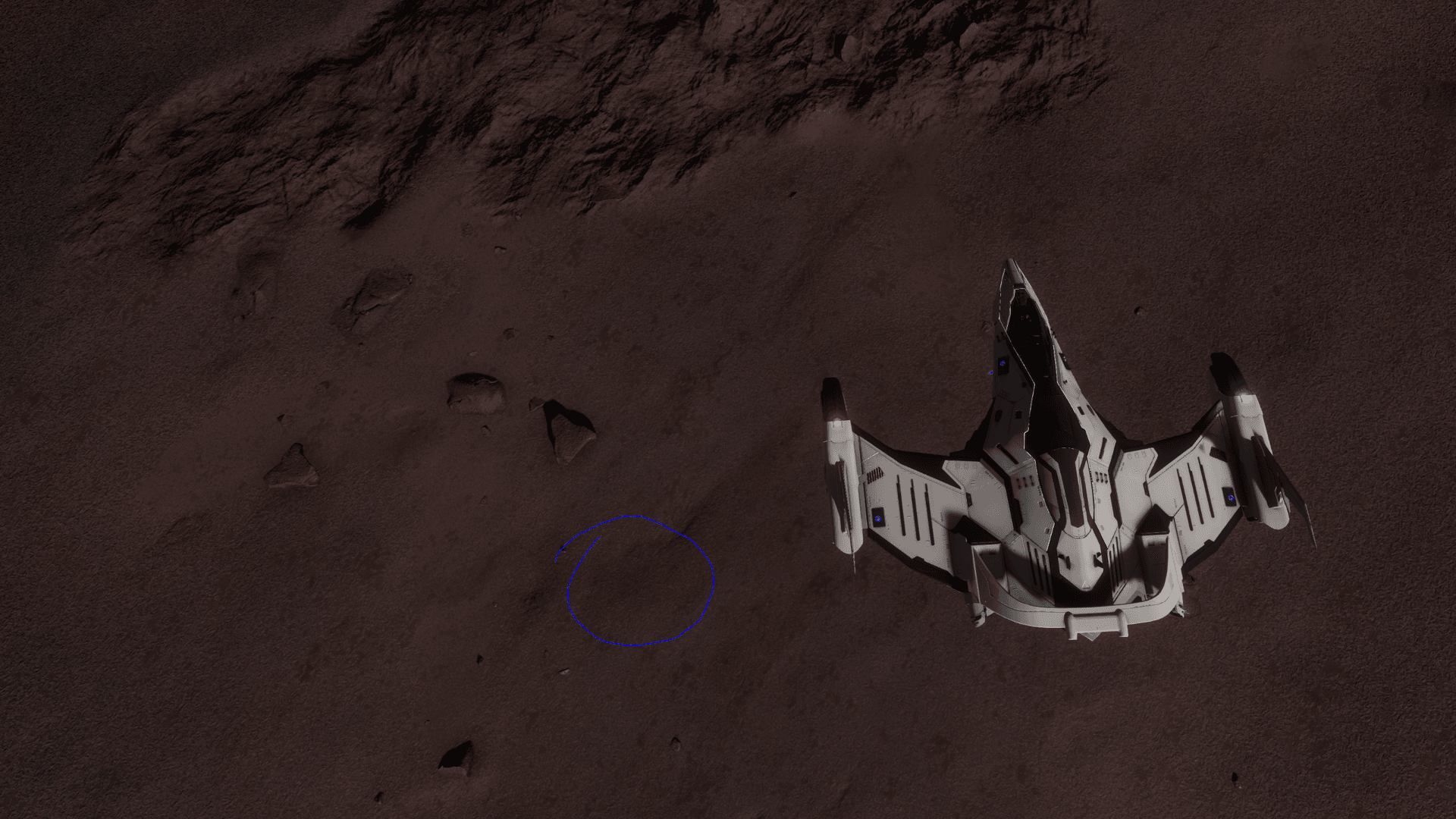
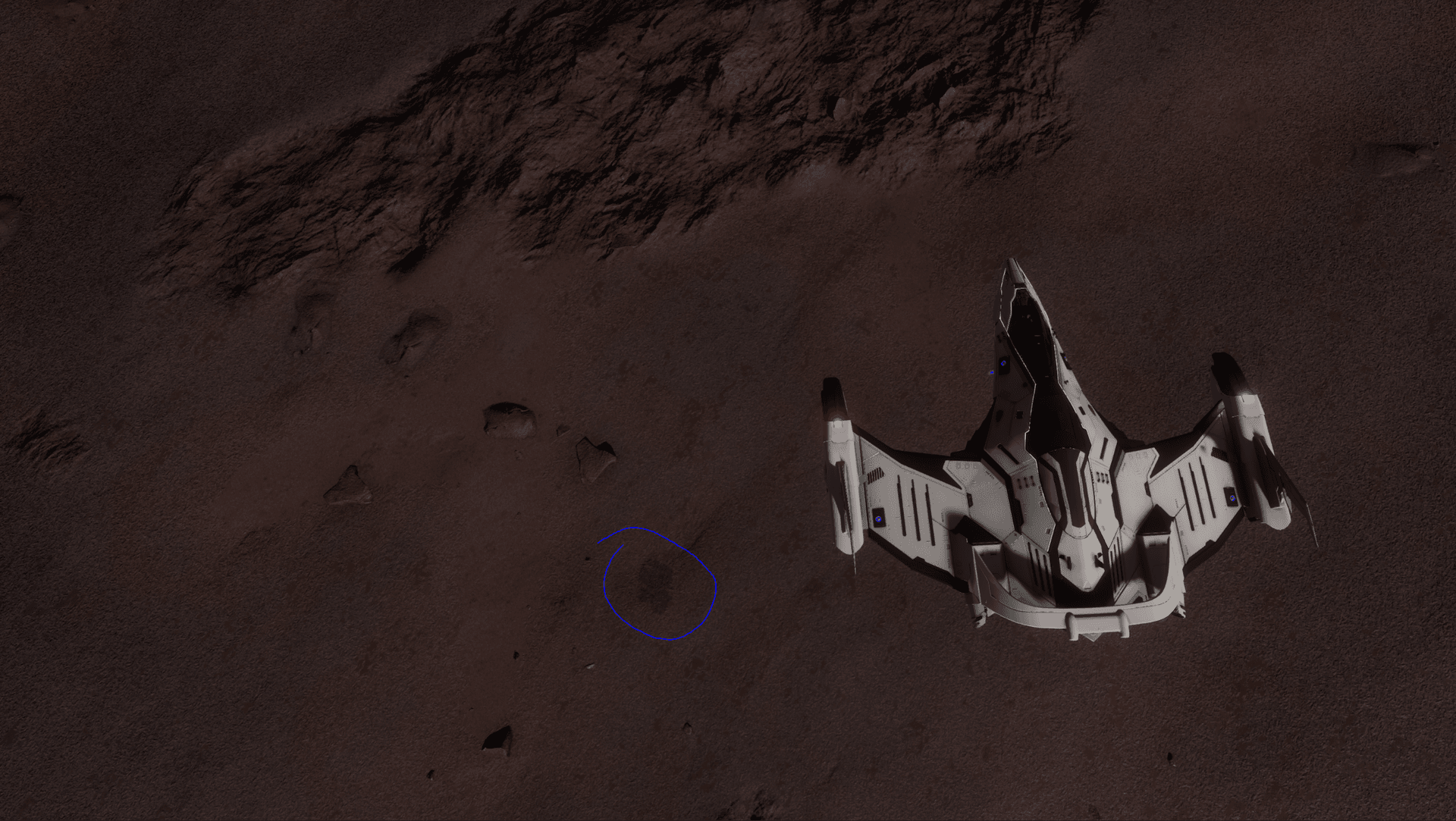
Having this knowledge, I took off and scanned a number of systems, looking for biological signals. A finally find one with a single signal and probed the planet with the DDS. It was a bacterium of some kind. All I know at this point is that it should look like a puddle or spot (?) on the planet surface. There is where I got stuck for an hour, having absolutely no luck finding this elusive space plant. What really helped me spot the sucker was some flying techniques with the camera suite that allowed me to eyeball a larger surface area at once. Thanks to folks at reddit and some nice tips here on Just from other Cmdrs. I want to highlight that while this was great technique, I found that graphics settings in game also affected how easily some of this bacterium was seen against the planet surface and playing around with shadows especially was helpful. At certain distances from the surface the bacterium would take on a darker 'puddle' look and be very easy to spot. Up close from the cockpit though it was almost impossible to distinguish.

I've attached some pictures for illustration. I just didn't find graphics settings discussed very much in exobiology guides as much as other tips so I thought this could be a highlight of my submission. I changed my shadow settings to low and the bacterium at higher fly bys was much more consistent in its darker puddle-like colour.

CMDR Henckes's avatar
CMDR Henckes3/7/2025

$4

The exobiology is one of the best part of exploration and was a great addition to the game with the Odyssey DLC, the only con is that it would be welcomed more variations of things you can discover on the planet surfaces.

But to star with it it is simples, and not so expansive you only need a few things:

  • A ship, a small one would be better equipped with a Fuel Scoop, a Detailed Surface Scanner and an Advanced Planetary Approach Suite.

  • An Artemis Suit

  • A SRV (optional)

So with this three things you will be ready to go, the small ship will be better for you to fly close to the ground and they are easy to land as well.

The first thing you must to do is choose a path to fly through and find planets with biological signals to scan, after that you can start to jump, stop and honk the system and then go to a the Full Spectrum System Scanner (SSC) mode to scan the planets there you will be searching the planets with notable Biological Signals, this mean there will be organic plants, bacteria or fungus to be scanned.

When you find this planet go there and when you get up close you can open your Surface scan and throw probes to scan the surface. The planet now will have those blue spots, that will point where the organic signals can be found, if there more than one notable signal you can cycle though them and see each one individually.

Now it is time to land in one of those blue areas with you ship and search for the organic data, it sometimes will be hard to find, but once you find you land your ship and disembark, now take you bio scan and point to the material, you have to scan three samples to complete the scan, remember that the samples must be distant from each other and you can finda another spot using your ship or your SRV .

After scanning the all the samples of the planet you can go to other planet in that system and scan other samples, if not you can go to the next system and repeat the process, until you complete the planned path or you think you have scanned enough. At the and go to the closest station and sell all you data, it will give you a nice amount of credits for you to buy a new ship and a better FSD to go futher in you exploration!