Submissions (8)

XCezor's avatar
XCezor3/11/2025

$6

First Investigation of Thargoid Maelstrom - CMDR XCezor Log

After failure of the Proteus Wave, new objects made their way into the Core Systems. What were they? With a new potential threat in our sight, the investigation began.
It's an almost full historical story, little colorized with fan-fiction narration from my perspective of first time travel into Titan Maelstrom.

It all began on February 9, 3309, a couple months after the Stargoids reached their targets, our home. After a break from my service, I once again launched my Krait Mk.2 into the endless sky and opened the latest Galnet News searching for any updates regarding the Maelstroms. With minimal information, I decided to check for myself if there was any way to snoop on what lies inside these objects.

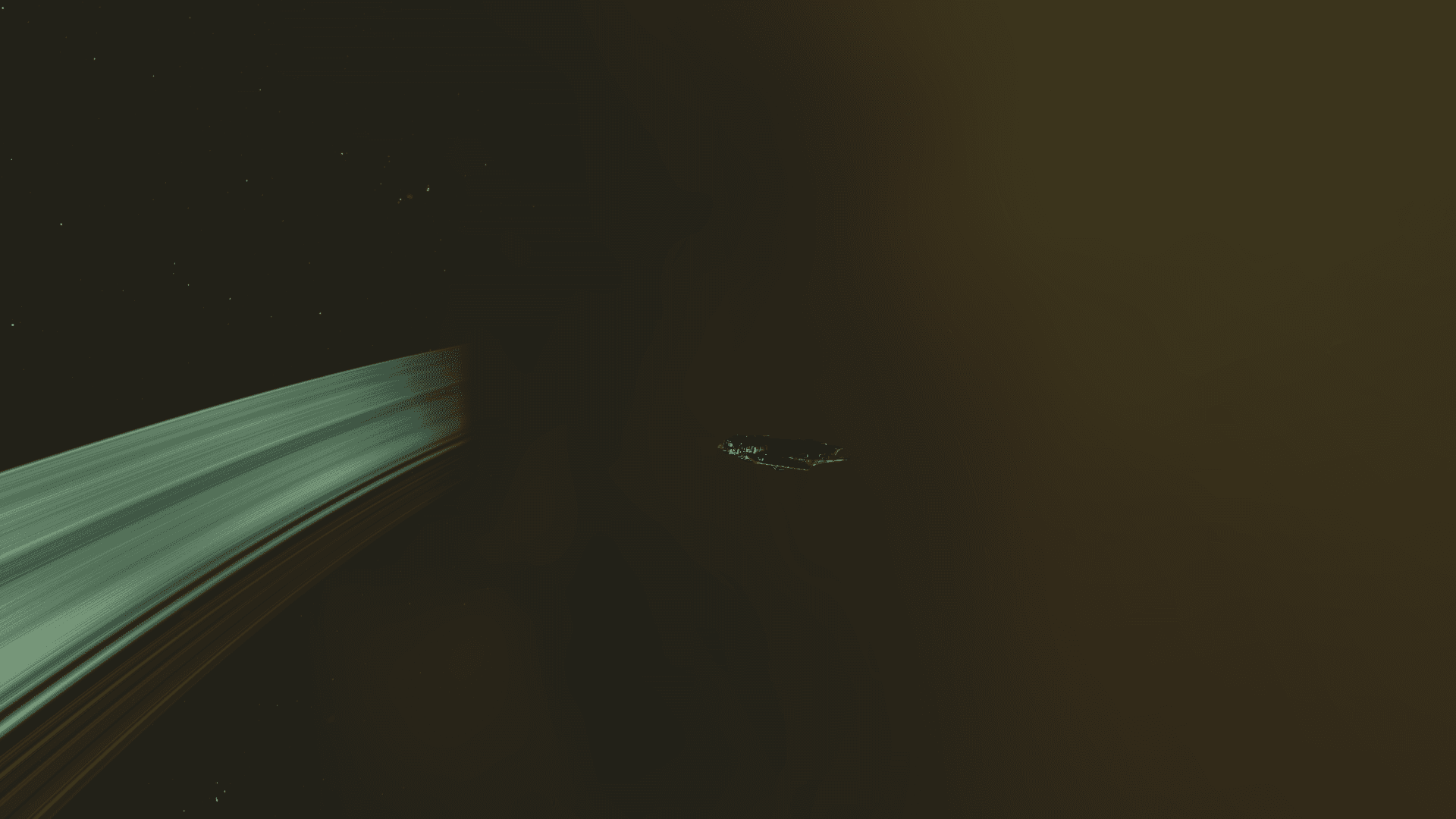
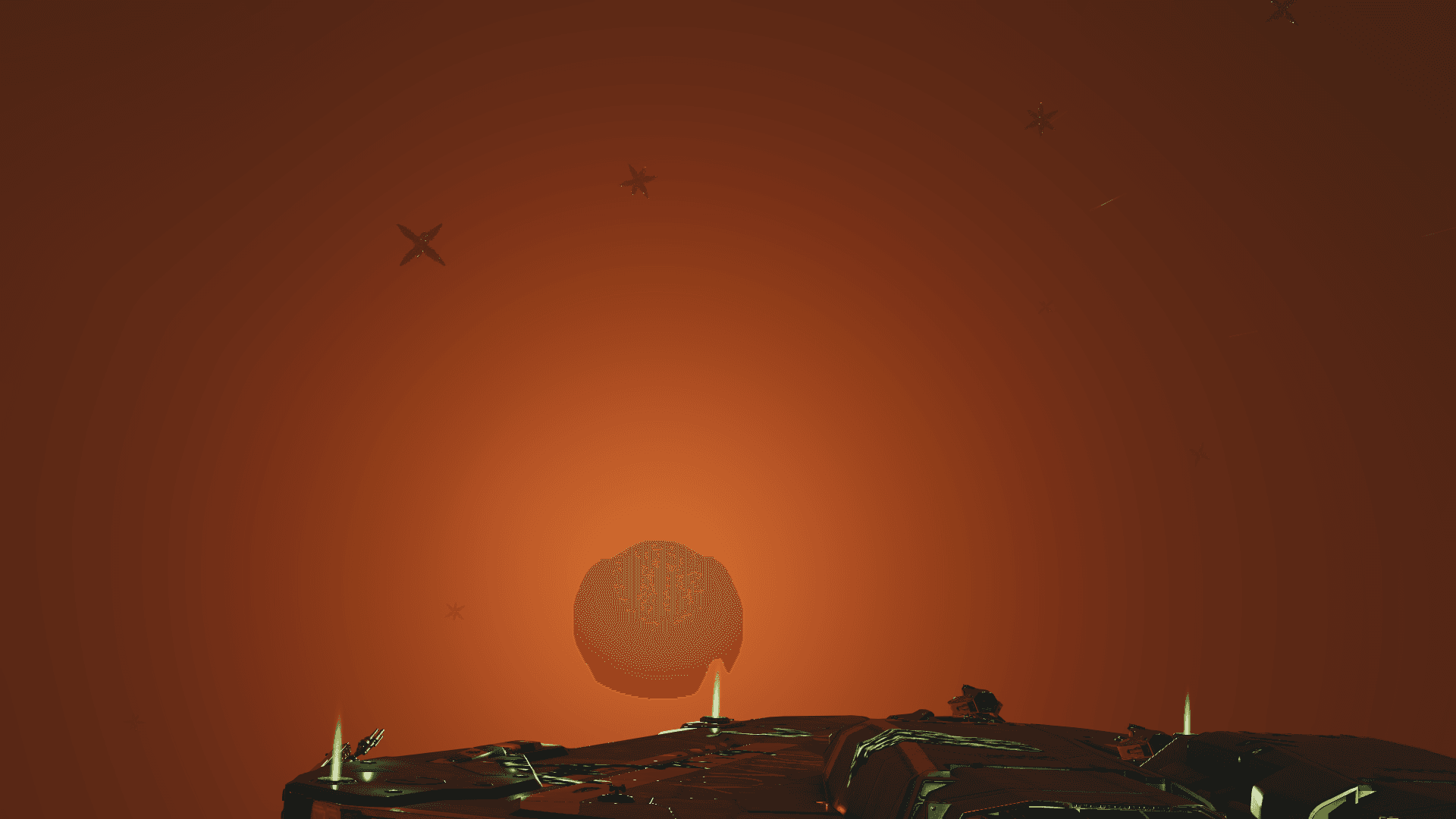
I can't really tell which Maelstrom I visited back then. With the help of my only two pictures and system maps, I can say it was probably the Indra Maelstrom, because the gas giant with white rings looks very similar to the planet next to Indra, and it's relatively close to my faction's territory.

Without further delay, I installed Guardian weaponry on my ship for defense and reached my target, avoiding any Thargoid patrols in the system. Only me, a huge caustic cloud, and countless new Thargoid floating mines.

Before I had even managed to deploy my hardpoints, I received a warning message that my Guardian modules had been destroyed. I was too far to turn back, so I simply continued my investigation. Keeping my ship at a dangerously high temperature, I was able to slow down the caustic corrosion, giving myself a couple more minutes before I needed to withdraw.

As I got closer to the Thargoid mines, one of them, unnoticed, managed to sneak up from the side of my ship and detonated, heavily damaging my internal modules and hull structure. As if that weren’t my only problem, something from the center of the Maelstrom launched a huge, blue signal, similar to an Interceptor's pulse wave, but on a much larger scale. It didn’t shut down my ship, but it pushed me back so far that I found myself outside the caustic cloud.

So I've learned a bit of information about new threat. The object inside of the Maelstrom was still a mystery to me, but I knew that those "mines" were built from a new resources. The Maelstrom didn't want me to visit it, but I was just getting a warm up.

I returned to my Fleet Carrier and took out an anti-xeno ship with improved armor, sensors, and human anti-xeno weapons. After departing from the landing pad, I went out on a little hunt. After a few Thargoid interdictions, barely scratched, I returned to the Maelstrom. Less than a minute later, I came across a minefield filled with Thargoid mines. I started shooting them down and used limpets to collect materials from them.

After some time, I noticed that the object in the center was once again preparing its pulse wave, but I was too far away to get hit by it. That meant someone had to be nearby. And I wasn’t wrong. when the pulse wave launched, I could only see a ship being pushed out of the Maelstrom at enormous speed. I don't know if the pilot noticed me, but at least he was alive.

I continued scavenging, and after my ship's hull got low enough to begin evacuation, I left the Maelstrom and stored the resources on my Fleet Carrier. Nobody knew if they would be useful, but just to save time in the future, I decided to keep them in a safe place.

Later on, we have discovered that inside these Maelstroms lies a Thargoid Titan, probably an active version of the Thargoid Structure Sites found on many planets earlier. The truly terrifying part comes when we think about this: we found dozens of Structure Sites, yet our home was invaded by only 8 Titans. We don't know where they were hiding this whole time, but something tells me we’ll hear about them again in the future...

Eralm_237's avatar
Eralm_2374/21/2025

$6

Appologies, as I’m not a good storyteller, but more analytically minded (and I hope I haven't entered already).

 =========

The 2nd Thargoid war started a bit differently for me. Being a part of a thargoid hunting PMF, and a live-streamer on Twitch, I was quickly approached by other PMF’s for coordination of activities soon after Taranis, Indra, and Leigong arrived. This rag tag group of 4 player minor factions (PMFs) was named “MODE” – Mostly Organized, Difunctionally Efficient. In less than six weeks going from a group of a thousand players to well over five thousand players – all looking where to go to maximize their play time and efforts.

Early on, it was determined a triad of activities were most beneficial of getting a system from the thargoids: commodities, evacuations, and kills. My PMF specialized in kills, and other PMFs joined with their specialties. Our alliance picked 3 titans to focus on: Cocijo, Indra, and Taranis. Soon we had about 20 PMFs, all with coordinators, talking about who was going where when, and expected results. And somehow, Thargoid samples (not kills, not supplies) was found to be the most effective – one sample was worth about 20 kills, or 15 commodity missions completed. This made NO sense to the military veterans in the community – you don’t send doctors to fight wars, you send warfighters with a few doctors.

We looked at numbers and participations, we had about 6 core logistics CMDRs spread across about 20-30 PMFs and coalitions – we called ourselves Coordinators. Some don’t ever want to be named, and that’s ok. Every week, we would look at specialties and participation, to effectively show CMDRs where their gametime could be the most effective – from players who have only a few hours a week to players who “no-life” the game. We knew we needed a tool to help figure out where to go with so many options.

Soon, a system target grading system came into play. This metric assisted Coordinators in picking targets effectively for their player groups – everything including station distance from main star, local commodities, system specialties (Technology Brokers, Interstellar Factors, and Material Traders) taking priority over systems with no special services. The number of large, medium, small pads were taken into consideration along with planetary ports vs orbitals. Knowing time was precious to players who had a few hours a week, orbitals took priority due to planetary ports taking longer to get to due to Orbital Glide. This took a bit of time to plug in all data, but gave a weekly list of systems each PMF could do without players loosing too much interest in the content by wasting their time to show no progress (or a system being reset) before the deadline.

Every Wednesday we would look at the outlook for tick on Thursday – and get a preliminary view of what to expect. Some weeks we told our PMFs not to do anything on Wednesday because nothing would be able to be done in time. Then on Thursday (or on tick/update day), we would be pouring over data, seeing what was available, what was defended, and what was repelled, and who was where was very fun doing first thing before “going live” on Twitch. Which evolved into doing it live on Twitch so others could see, and leaders of other PMFs could see what was going on for their groups to go do. It was wonderful to see many players, and PMF leaders coming in and asking “what systems are under attack?” “Where does my PMF of [small number] need to go to help out?”

DCoH (Defense Council of Humanity) was a good source of information, which is now a website no longer active, showed the weekly - or semi-weekly changes - as well as which ports/stations were under attack, damaged, abandoned, on-line (with all but Universal Cartography services), or under alert. They used the normal 3rd party tools to access the EDDN and get the information so everyone can see what is going on without the need to log in, go to the galaxy map, and hope the CMDR has been in the system to see what is going on where.

Then came the Community Goals to eventually get into the Titans – the spawners of Invasions. Players were disheartened, every three months or so, efforts were either really helpful and progressive, or players were getting their exhausts kicked into their cockpits. When players were not seeing their efforts worth their time, many turned to exploration or BGS work that was not impacted by the war effort, or some just left to go to Colonia. Many times as a Coordinator we heard “why do I want to haul, fight, sample, or do anything when the progress does not matter?” And they had a good question, which we had no answer for – and routinely had complaint meetings instead of strategy meetings, because even our hours of picking targets was worthless.

When we got into the first Titan – Taranis (why would it not be the first turd that came to the Bubble?), and got repelled by the Pulse Wave, it was progress. Yes there were Spires by now, and the Thargoids were being pushed by using the Spires’ progress to push back the outermost 10 Invasion systems, but we had tangible progress now. We could push to the Titan. Player activity increased, and questions came in regularly on how to participate, and what to do. The one that annoyed Coordinators was “I’m not a combat pilot, there’s nothing for me to do.” We called BS. Every. Time. We knew there were multiple activities, and only ONE was combat:

1.     Commodity hauling

2.    Thargoid samples

3.    Wounded Evacuations

4.    Passenger Evacuations

5.    Anti-Xeno Combat <- THE ONLY COMBAT ONE!!!

Soon, one-by-one, Titans started falling – Taranis, Leigong, Oya, Hadad, Indra, Thor, Raijin, and finally Cocijo (after her butt moved to Earth in Sol). Each one we saw players coming back – the Arx reward helped a lot, and the climax of Cocijo – the most fortified titan – landing at Earth lit a fire under a lot of CMDR’s cockpits and the Thargoid War ended with her detonation.

Now us Coordinators are waiting for the next Thargoid signal or threat to reappear. It will only be time.

lionriver's avatar
lionriver4/20/2025

$6

Hi Commander and JustAbout:

Combat in Wogaiwong: Fighting in High Gravity

This is the story of how I learned to fight in a high-gravity system. A system where mistakes weigh more than the ship you're flying. An environment where even the Thargoids seem to hesitate before touching down.

It all began in the Wogaiwong system — a place that challenges even veterans. The battlefield stretched between two systems: Wogaiwong and Nibelaako. Though both were under the same invasions, the experience couldn’t be more different. One offered coordinated resistance; the other was a chaotic hell, forcing you to improvise and survive with the bare minimum.

Gravity in Wogaiwong hovered between 2.5g and 2.7g. For some, that’s just another number on the HUD. For us, it was a sentence. SRVs barely responded, and any miscalculation with vertical thrusters could slam you into the ground — shields down, hull integrity dropping. Even if you tagged just two pips into engines, the ship would barely lift off. Hydras were affected too, burying themselves into the terrain, and some ships took damage just by landing.

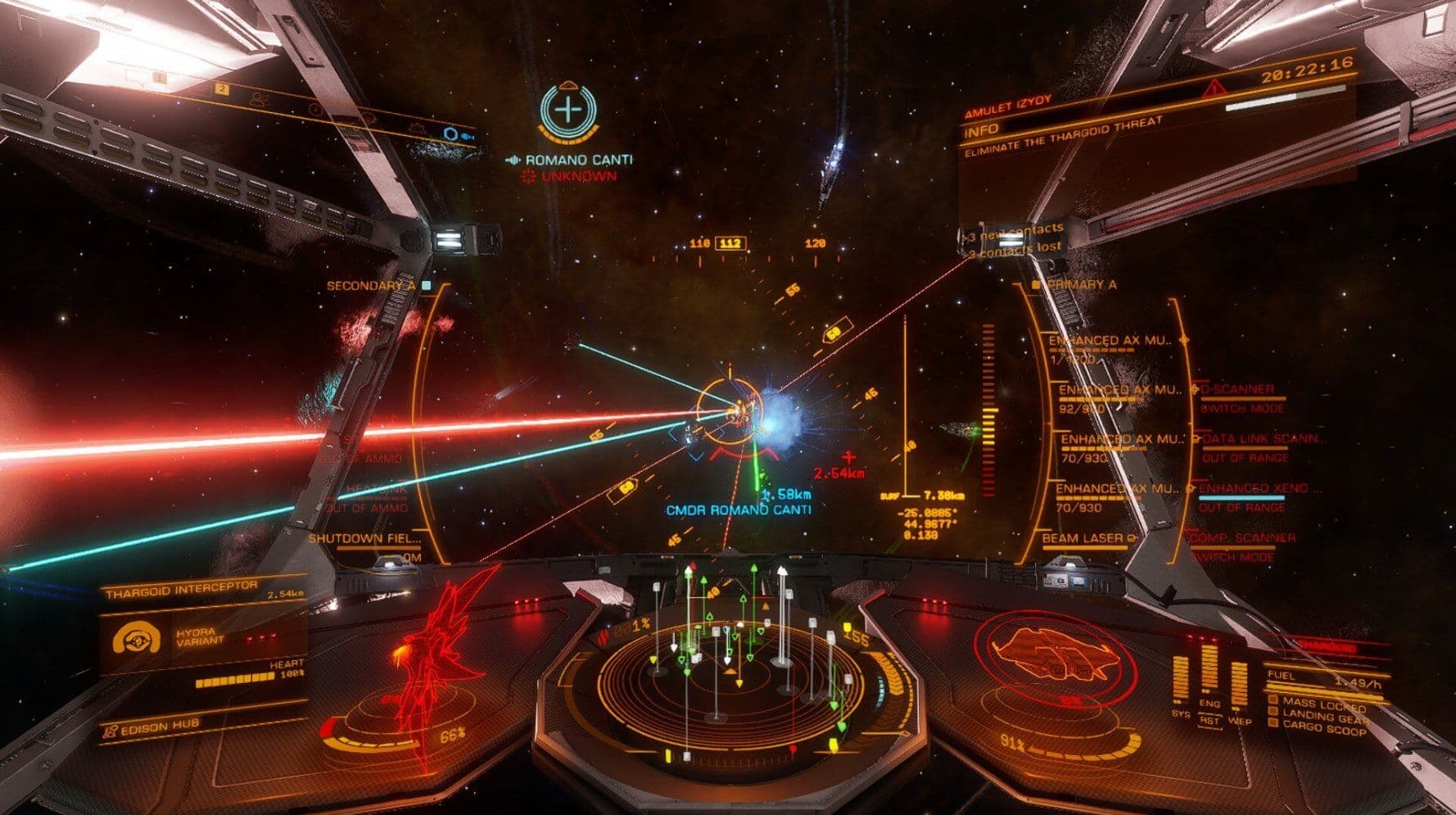
We fought with the Python MKII — a sturdy ship that could hold its own against Thargoid strikes, if you knew how to use it. My favorite weapon? The anti-xeno shotgun. But I started with AX multicannons. Not just because they were effective — which they are — but because nothing compares to the feeling of cracking a Hydra's heart up close, watching those organic forms explode while she screams in frequencies no human should ever hear.

I always positioned myself from above. From that angle, I had a clearer shot straight to the heart when it opened. It was a game of reflexes — but also of patience. With Cyclops, you just needed to break three hearts. With Hydras… that was a whole different story

The Routine of War

The cycle was constant. Every 16 hours sharp, a conflict zone would shut down. The fighting stopped abruptly — as if the Thargoids responded to a signal only they could understand… or maybe we AX fighters were just that well coordinated. That’s when we’d switch systems, or jump the carrier to the next active zone.

But it wasn’t in vain. Every battle, every defense, every partial victory mattered. Once the Thargoids pulled back — when the Hydras drifted more than 60 km away from the station — the game would reset. And with it, hope would rise again.

The stations remained damaged, but they were free. And after a day, they would enter the repair phase.

The Caustic Clouds

The atmosphere was thick with caustic clouds. When Thargoid ships flew low beneath our stations, it felt like we were fighting inside a space station itself. It’s worth mentioning — Thargoids emerge from regions with ammonia-based atmospheres, so everything we brought degraded faster.

Ammo ran dry quickly, and using the 2A shotgun overheated my ship to 275°C — just enough to burn off the caustic corrosion, but at the cost of thermal damage. Repair limpets didn’t stand a chance. The turtles (Scythe Interceptors) would wipe them out almost instantly.

Modules began to fail, one by one. Every resource had to be managed like it was your last.

The Rest After the Battles (and the Resets)

When the front lines went quiet, there was a ceasefire to regroup and repair. Combat zones powered down, and we knew we had to wait for the next cycle. During those pauses, we refueled, repaired — and often stared at the photos of burning stations, flames consuming the structures we had just defended.

Sometimes we arrived just as explosions lit up the hull of our ships, and with no landing pads available, we had to wait outside, watching from a distance.

Final Reflection

We fought for glory, for credits — and sometimes for Community Goals that gave out sweet rewards, like 64-slot anti-corrosion cargo racks. We fought for that feeling of progress, even if it was just a meter at a time. For bringing light back to an invaded station.
And yeah — it was during those battles that I finally saved up enough to buy my fleet carrier.

The Wogaiwong system was my training ground, but also my trial by fire. I learned that there’s no such thing as clean combat in high gravity. That firepower means nothing without positioning. And that when a Hydra drifts 60 kilometers out… sometimes they even teleport when several gather — probably a server issue — and the best fix is to reset the zone or switch instance.

Verified
USCSS's avatar
USCSS2/10/2025

$6

Chronicles of the Commander USCCS (This story has fiction and reality)

I'm going to tell you something that happened to us in the system in Col 285 Sector ZE-P c6-11.

My squadron and I were jumping from system to system fighting Thargoids as if there was no tomorrow. The bubble was chaos. Interceptors were coming out everywhere. People were desperate, they didn't know what to do. Many stations were damaged. It seemed like there was no hope anymore.

It was already late. We were tired. My ship, an "Imperial Cutter AX" needed repair as did the other ships.

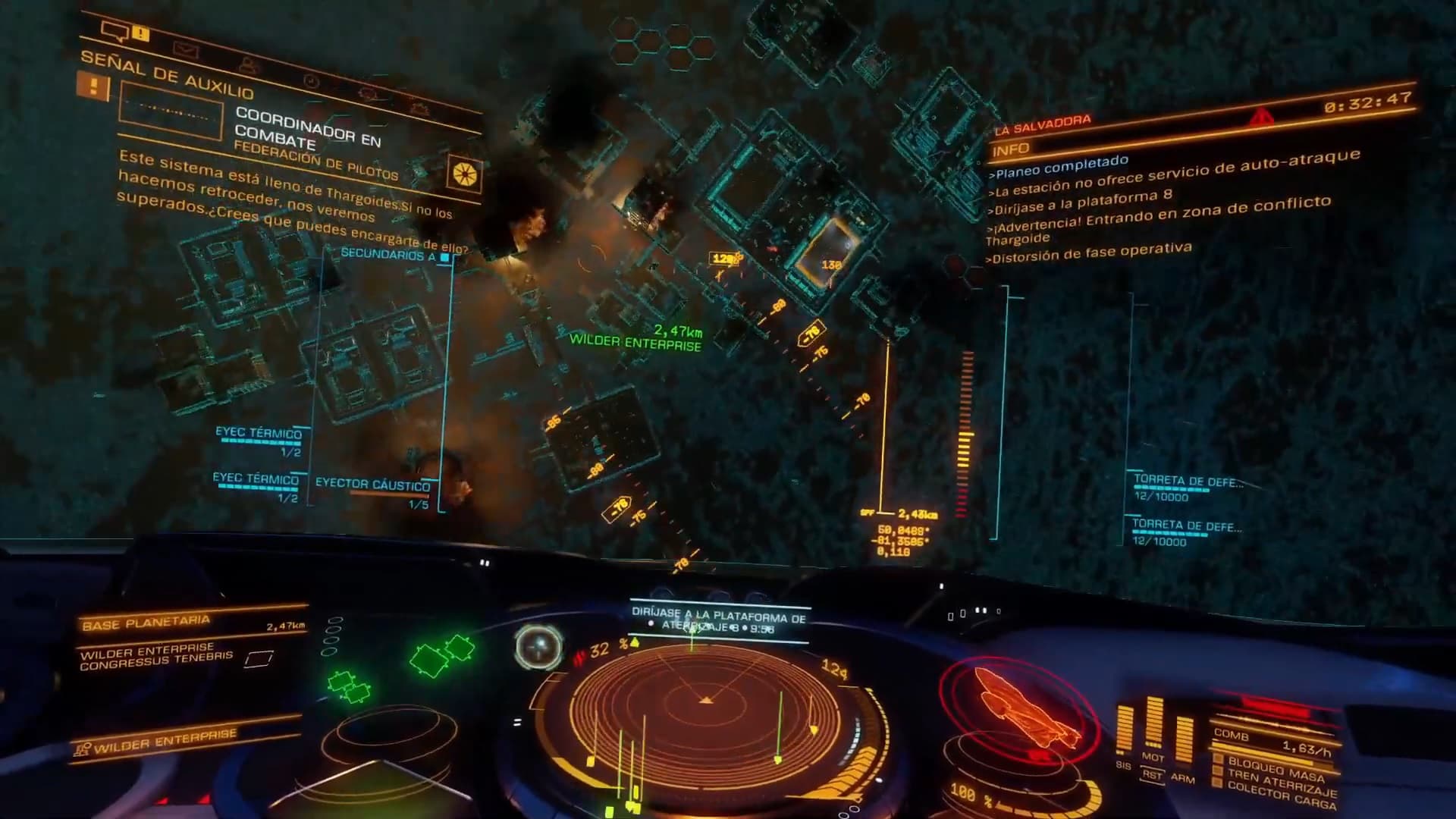
But as we were leaving, we received a distress signal from the system Col 285 Sector ZE-P c6-11. The planetary base "Wilder Enterprise" had been damaged and the sensors were detecting signs of human life inside, so we couldn't leave them there.

My squadron and I approached carefully. The base was surrounded by a Green fog. The weather was disgusting. There were wrecked ships everywhere. Thargoids patrolled the area, but we managed to sneak in by cooling the ships so they wouldn’t detect us.

Inside the base, things were worse. The Thargoids had turned the place into something out of a horror movie. The walls were covered in an organic thing that seemed to be alive. And in the middle of all that, we found the survivors: a group of scientists and technicians hiding in a shielded chamber.

Getting them out of there wasn’t easy. When we took off from the base, the Thargoids attacked us. We defended ourselves as best we could, but we lost two ships from the squadron. My “Imperial Cutter AX” also fared badly, but at least we managed to get the survivors out.

But it didn’t end there.

When we entered orbit and performed a jump to leave the system, we were intercepted again. By then, my ship had no shields and only 20% of its hull was intact. The warning systems kept going off. It seemed like an impending disaster awaited us.

As I tried to stabilize the ship, I saw on the monitors that a Thargoid interceptor was rapidly approaching. The scanners showed it was ready to fire. At that moment, my squadmate stepped into its path, absorbing fire and buying us precious seconds.

“Jump, USCSS, jump now!” I heard over the comm. I knew we couldn’t hold out much longer, so I locked in the coordinates for another jump. But the Thargoid interceptor was so close that the jump process was slow. The Thargoid wouldn’t give up, and I fought back panic as I waited for the jump process to complete.

Finally, the jump drive activated and launched me through hyperspace. The other ships also managed to jump. But our nightmare wasn’t over yet. When we reached the new system, another Thargoid ship was waiting for us. It seemed like there would be no rest.

We were prepared for the worst, but suddenly, a nearby fleet carrier defense squadron appeared. The allied ships attacked the Thargoids, giving us the respite we needed. I took advantage of the distraction to head straight for the Fleet Carrier.

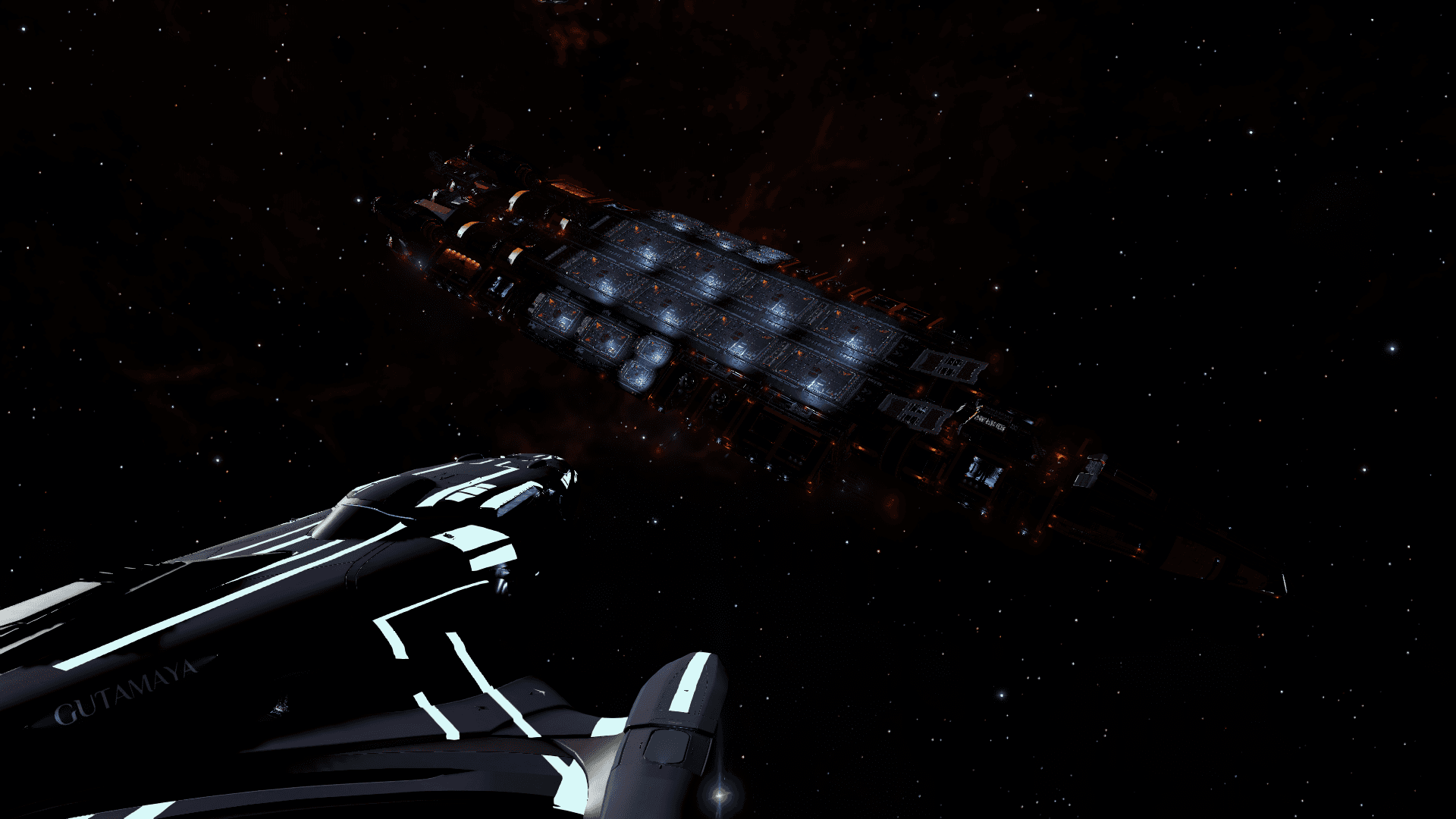
Arriving, and seeing the massive structure of the Fleet Carrier, was an indescribable relief. We landed and began emergency repairs. My ship was in a sorry state, as were the others, but we were safe. As the technicians worked on the ships, I slumped in my seat, grateful to have survived.

Now, months later, things are calmer, but the Thargoids are not entirely gone. Humanity is still standing. But many are traumatized by what happened.

And that's it, Commander. That's my story.

There's a phrase from Fallaut that says "War never changes" and Elite Dangerous is no exception.

Greetings Commanders!!

(Translated with Google Translate)

AlvarZ4's avatar
AlvarZ41/29/2025

$6

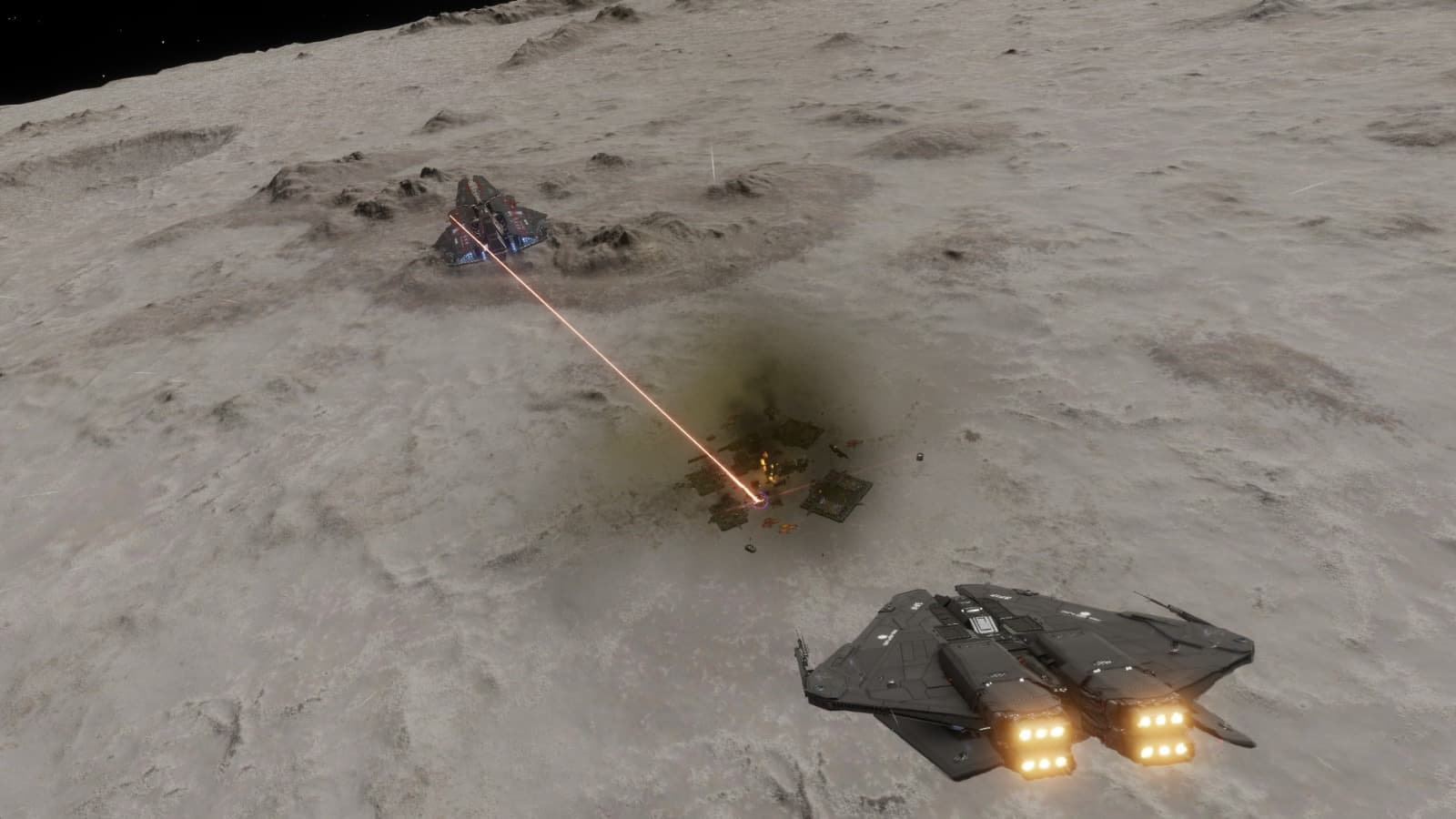
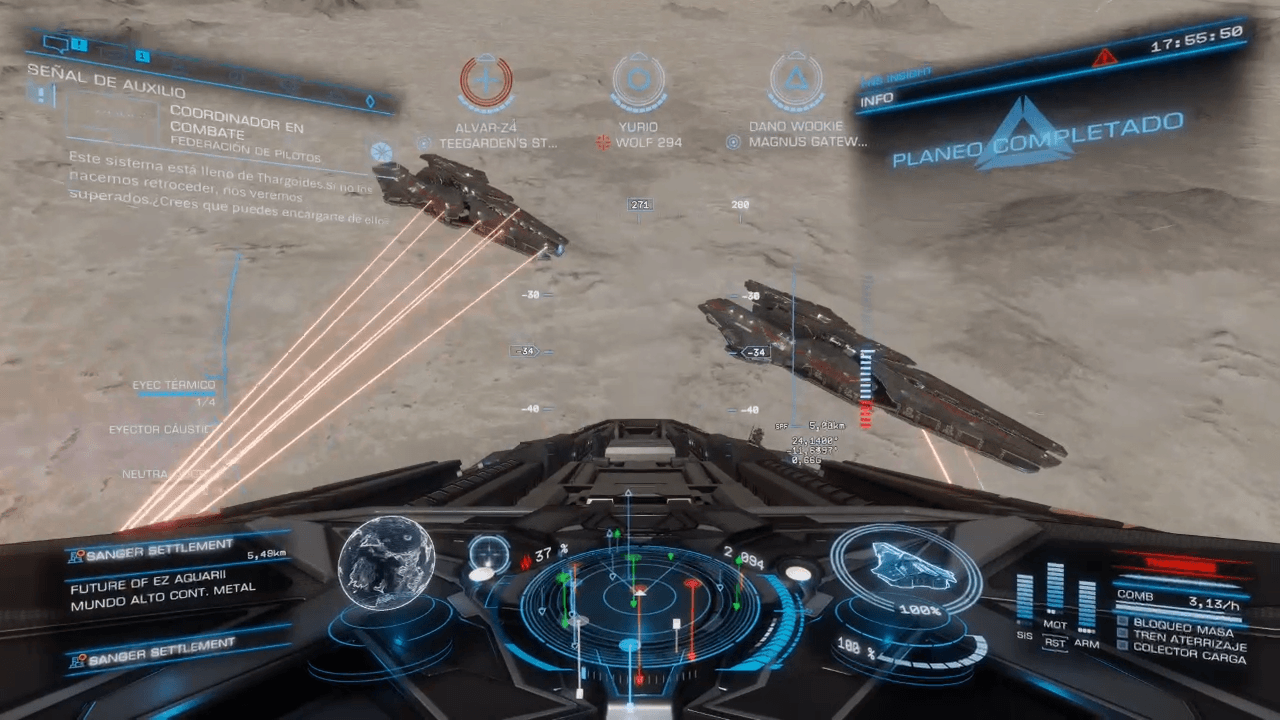
I have created this short story based on real events as they happened, giving it a narrative touch to make it more enjoyable to read. I had 2 images of the battle, I hope they are enough to represent the event, but I'm sorry I don't have images of when the Anti-Xeno Initiative arrived. I hope you like it.

The Defense of EZ Aquarii: The Battle for Sanger Settlement

Alarms blared across the Sanger Settlement as the sky became a chaotic swirl of energy beams and screaming interceptors. The Thargoids had arrived in full force and our defenses were buckling under the immense pressure. We had held them off as long as we could, but our weapons were beginning to overheat and our ammunition was running low. It was clear: we needed reinforcements, and fast.

The call for help had gone out across the system and the Federation responded quickly, deploying a Farragut-class battlecruiser to reinforce the embattled station. The arrival of the massive warship momentarily turned the tide, its artillery pounding the Thargoid scouts and interceptors with relentless accuracy. The station's defenders took the opportunity to regroup, rearm, and prepare for another wave.

But the fight was far from over. A Hydra-class Thargoid, one of the deadliest Thargoid interceptors, descended upon the battlefield, its caustic weaponry tearing through human ships with ruthless efficiency. Though formidable, it was dwarfed by the mere presence of the Farragut. The Federation cruiser unleashed a devastating bombardment, forcing the Hydra to maneuver on the defensive. However, Thargoid forces swarmed the area, overwhelming our squadron. The order came: retreat and regroup. With heavy hearts, we initiated an emergency jump out of the system, leaving Sanger Settlement behind.

We spent hours coordinating our return, gathering supplies, and planning a counterattack. The data we had gathered on the Hydra’s movements gave us a small hope of exploiting a weakness. Our hearts pounded as we exited the supercruiser back into the war zone. What we saw next was both a surprise and a relief: another Farragut-class battlecruiser had arrived.

With two capital ships in the fray, confidence rose among our ranks. The combined firepower of the Federation tore through the swarm of Thargoid ships, giving us the perfect opportunity to strike at the Hydra. We went at it with everything we had, unleashing plasma blasts and experimental anti-xeno weaponry. Still, the battle remained uncertain. The Hydra was relentless, and for every Thargoid ship we shot down, more seemed to take their place.

Just as we began to fear we would be overrun again, our long-range scanners picked up multiple contacts approaching at high speed. Reinforcements. The Anti-Xeno Initiative had arrived. A dozen, then two dozen independent commanders launched themselves into the system, their ships packed with AX weaponry, all ready to join the fray. The tide of battle changed dramatically.

With new firepower and renewed morale, the combined might of the Federation, our squadron, and the Initiative pilots drove the Hydra back. Its once-formidable shell began to splinter under the attack, and finally, with one last attack, it erupted in a fiery explosion. The remaining Thargoid forces scattered, their attack thwarted.

The battle for Sanger Settlement had been won, but not without a price. The station was badly damaged, and many brave pilots had fallen. However, when the dust settled, one thing was clear: humanity would not bow to the alien threat so easily. We would stand our ground, fight, and defend our home, no matter the odds.

The battle was a hard-fought victory, but the war was far from over. Only a few more systems remained under Thargoid control, and their liberation was within reach. Every battle fought, every settlement reclaimed, brought us closer to the final confrontation. The Federation, the Anti-Xeno Initiative, and the brave independent commanders were ready for what lay ahead. We had faced impossible odds before, and we had prevailed. Now, all eyes turned to the gargantuan Cocijo Titan. Its destruction would be the ultimate symbol of humanity’s resilience and defiance. No matter how fearsome the Thargoids were, no matter how overwhelming their forces seemed, we had something they did not: unity, determination, and the unbreakable will to survive. The war was not over, but victory was within reach. This was not the end. This was only the beginning of our final battle.