Here at Just, we celebrate the knowledge and passion of fans. That's what the rewards you'll find across our communities aim to do. But as they're specific prompts, there might be something you're itching to talk about that hasn't yet come up.
That's what this reward will offer. What curious pieces of expertise are you proud of? What's your specialist subject on Mastermind? What interesting thing would you like to share with your fellow members?
Give us 150 words (or more!) in writing or video about a subject you know well and care about. The more niche, the more quirky, the better. Tell us why more people should have heard of Thales, how whisky is peated, how to get overpowered in Final Fantasy VIII within the first hour, or whatever else is close to your heart.
The top submissions will get $20 apiece and be featured in curated content right here on JAJA, a further two will receive $10 and may be featured too, and up to five more will each receive $2 as a sign of our appreciation.
Remaining$0 / 50
Task: Share something interesting about a subject you know better than anyone
Format: At least 150 words of original writing or video
How to submit a written entry:
Hit the 'submit to this reward' button just below this description - do not use the reply button unless you just want to comment on the thread, as replies will not be counted as entries!
Add a written response and feel free to include images.
Hit the 'submit to this reward' button just below this description - do not use the reply button unless you just want to comment on the thread, as replies will not be counted as entries!
Share a link to your post in the box that appears, then expand it so we can view the video on Just.
Once the deadline closes, we’ll pick up to eight submissions, award $20 to our favourite, $10 to two second-place winners, and $2 to up to five runners up. We may then share them as curated content.
Tier
Prize
Quantity
Remaining
1st
$20
1
0
2nd
$10
2
0
3rd
$2
5
0
Disclaimer: Geographical and age restrictions apply. Just reserves the right to extend the reward's duration. Please see ourTerms of Use for more information on how rewards are created and rewarded on Just. One reward available per member.
Take care not to breach copyright. Check our copyright policy before submitting.
This reward closed to entries at 9:58am on April 3, 2025 but you can still reply, react, and join the conversation below! If you’d like to enter other rewards which are still open, click here.
Created at .Page last updated at . Deadline at .
Submissions (19)
Raven3/5/2025
Won$2
Cosplay is one of my favrite hobbies, and I realy love doing FX makeup, specialy scary and gore ones. There’s just something so cool about making yourself look like a horror movie monster using only stuff you have at home. I don’t always have proffesional makeup or fancy SFX materials, so I just get creative with whatever I can find. I use things like oatmeal, paper tishue, white glue, and even coffe to make textures that look like burned skin, open wounds, or peeling flesh. It’s super fun to experament and see what works. Sometimes I even use gelatine or flour mixed with water to make fake skin. You don’t need expensive stuff to make awsome FX looks!
One of my best makeups was my zipper face makeup, where I made it look like my skin was being unzipped to show bloody flesh underneeth. I used a real zipper and glued it to my face with school glue (which I don’t recomend if you have sensetive skin, but it worked for me lol). Then I used tishue and glue to build up the "skin" around it and painted it with red and black to look like raw flesh. I also added fake blood to make it extra gory. It was one of my proudest makeup looks, and I got so many complaments on it!
Next in line is my stiched mouth makeup, which I did for Halloween. It was inspired by horror movies where the monster has its mouth sewn shut, and I wanted to make it look as real as posible. I used black tishue paper to create the effect of deep cuts and then glued pieces of thread to my lips to look like actual stitches. It was really hard not to laugh or talk while wearing it, but the final look was totaly worth it. It freeked out a lot of people, which is exactly what I wanted!
If you wanna make fake blood with stuff from a convinience store, it’s super easy. Just mix corn syrupp with red food colorant and a tiny drop of blue to make it look darker and more real. If you want thicker, more realistic blood, add a little bit of coco powder—it makes it look clottier and less like just red syrup. Another trick is using instant coffe to darken the blood and give it a dried, crusty effect for older wounds. And if you need chunky, fresh-looking blood, mix in some crushed up cerial or oatmeal! It sounds weird, but it looks super real when you put it on fake wounds.
I love playing around with all these materials and seeing how real I can make my FX makeup look. It’s amazing how much you can do with simple things that are just lying around your kitchen. You don’t need to spend a ton of money to make cool horror looks! And honestly, I think DIY FX makeup is way more fun because you have to be creative and think outside the box.
One of my next goals is to try making a torn-off face effect or maybe a really nasty, rotting zombie look with maggots (probably using rice for that lol). There’s always something new to experament with, and that’s what makes FX makeup so exciting. Whether it’s for cosplay, Halloween, or just for fun, I love seeing how far I can push my skills with just basic house hold stuff.
yan574363/30/2025
Won$10
Fragrances
I've seen people writing about much more sentimental things that are actually more relevant to society. I thought about writing about the Heimlich maneuver, since I'm a medical student, but I wouldn't be talking about something I really love and I believe it's somewhat niche.
A smell reflects much more than a simple sense, it's coming home and knowing that your mother has made the stew you love so much, or the smell of your grandmother's house, and what about the smell of rain? Smells reflect feelings, desires, times that will never come again and that you would like to keep.
A year ago I saw a post on reddit by a guy whose wife passed away and he still had her clothes and he wanted as much as possible for people to discover the perfume so that he could keep that memory and show it to his daughter when she grows up.
So I'm going to teach you what you need to know about perfume:
Concentration:
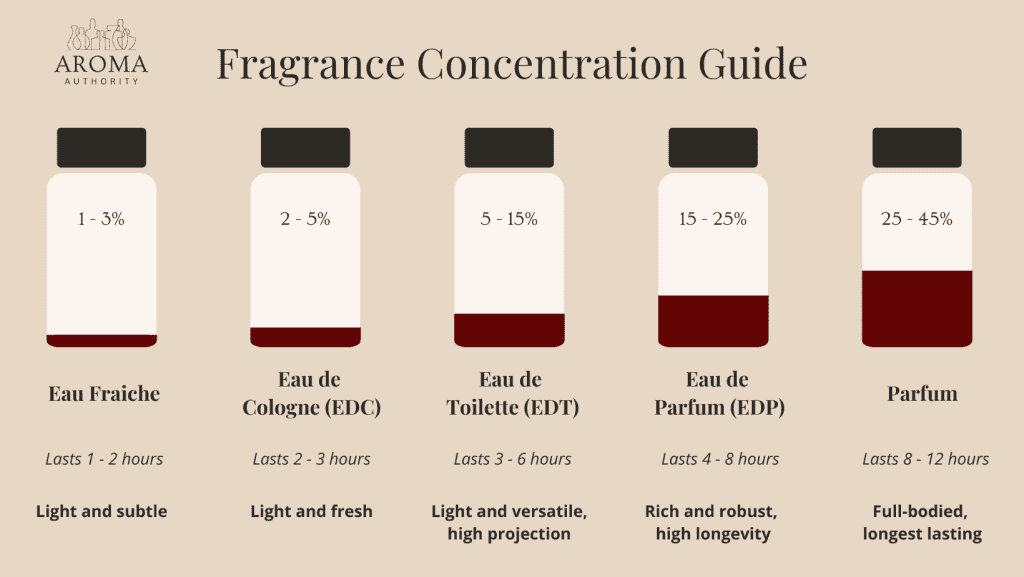
You need to understand that perfume is basically oils + alcohol (except for some crazy inventions, like sauvage eau forte) and the percentage of oil we put in is what defines how long the smell lasts on you and how intense it is. Gee, Yan, why don't I have a 100% oil perfume since it will make it last longer? Simple, the alcohol is what guarantees its volatility, which makes people in your environment perceive your scent, so here I'll introduce you to the concentrations we see on the market today:
Eau frachie: Here we have only 1-3% oils in its composition, which guarantees high volatility and little durability. It's very good for those who want something brief, like someone who uses it to go to bed or just to go to the bakery.
Eau de Cologne: Here we have 2-5% oils, it's still very volatile and doesn't last long, but here you're guaranteed a slightly longer-lasting fragrance. In general, it goes very well with eau frachie, they're lighter perfumes that you definitely won't use to go to a party haha.
Eau de Toilette (EdT): Here we have most of the perfumes we'll see on the market, it's the perfect dosage between oils and alcohol for your day-to-day life (5-15%). It guarantees good volatility, you'll certainly be noticed in your surroundings and good durability, usually lasting up to 6 hours. Here you have the ideal product for your day-to-day life.
Eau de Parfum (EdP): Here we have more robust perfumes, they won't exhale like the EdT (although some come close in terms of projection), they can have heavier notes (Relax, I'll explain that further) and guarantee good durability, generally here we have intense and even striking perfumes, their concentration is 15-25%.
Parfum/Extrait de Parfum: Here we have a great fixation, with the focus really on its intensity and durability, in general we have elegant, striking perfumes that certainly have a higher level of quality, their concentration is 25-45%.
Although you may read that the difference is only one of concentration, you should know that this simple change makes some notes that were previously more muted, such as in edt, more prominent, sometimes making what was a citrus perfume to wear in the heat, a perfume that needs mild temperatures. I bring up the example of sauvage, which are simply DIFFERENT FRAGRANCES simply by changing the concentration.
Some technical terms:
Fixation: This is how long the perfume stays on your skin.
Projection: How volatile the alcohol we explained above is, basically how much it spreads.
Now let's talk about specific notes:
Top notes: This is the note you will feel the moment you spray the perfume.
Heart notes: Here we have the soul of the perfume, the real essence of the perfume.
Base notes: Generally we have woody notes, because they are heavier notes, they ensure greater durability on the skin.
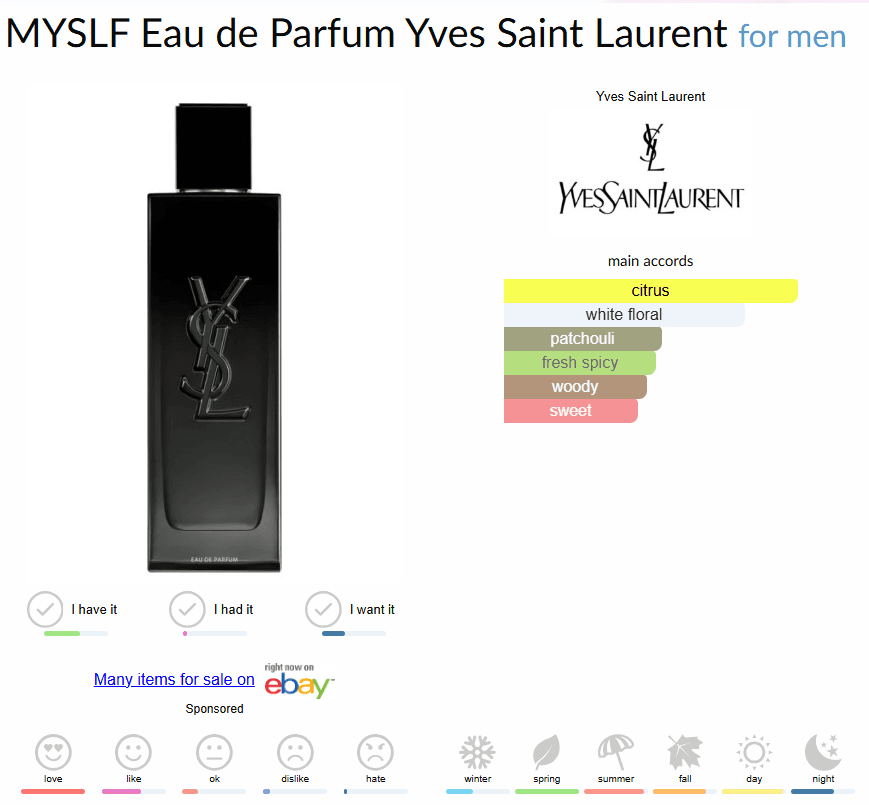
Now that you know that, let's choose your perfume. Heavy perfumes should not be worn in hot weather or indoors, as they are very uncomfortable when worn in the wrong environment. For this reason, I recommend the fragrantica website, which has a visual indicator to better understand the wearability of the perfume. But in general, citrus perfumes do very well in hot weather, but they will have a shorter shelf life. Here I recommend the current darling, myself by yves saint laurent.
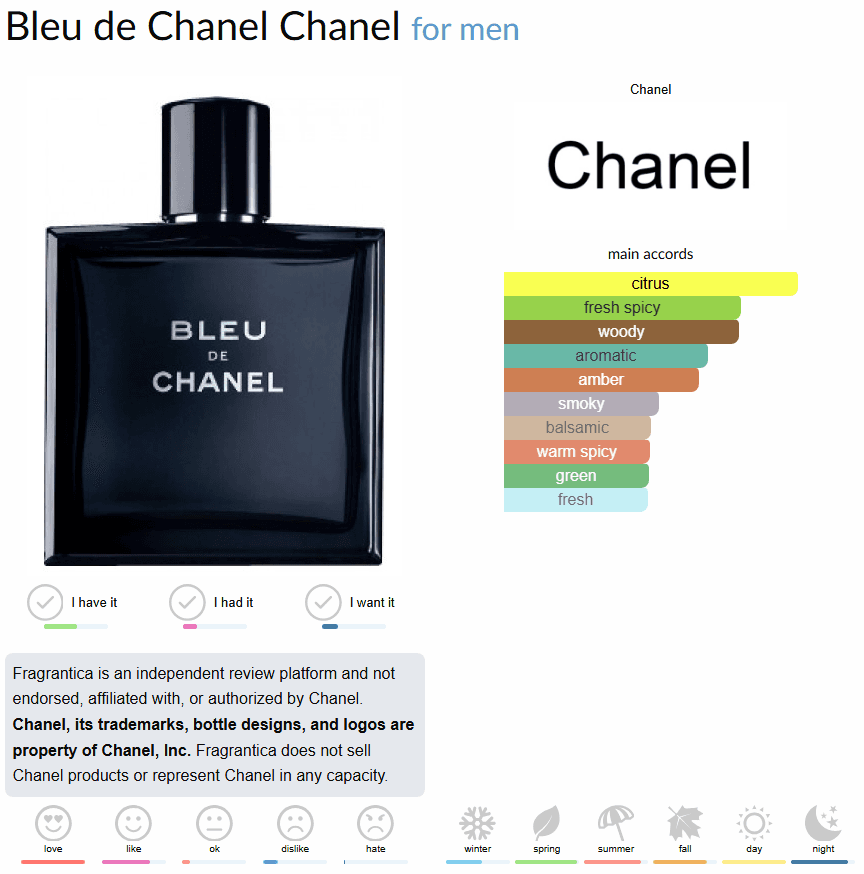
If you don't like citrus perfumes and want something more sophisticated and even striking, we have incense perfumes, which will guarantee you elegance and sophistication. The best example here is bleu de chanel.
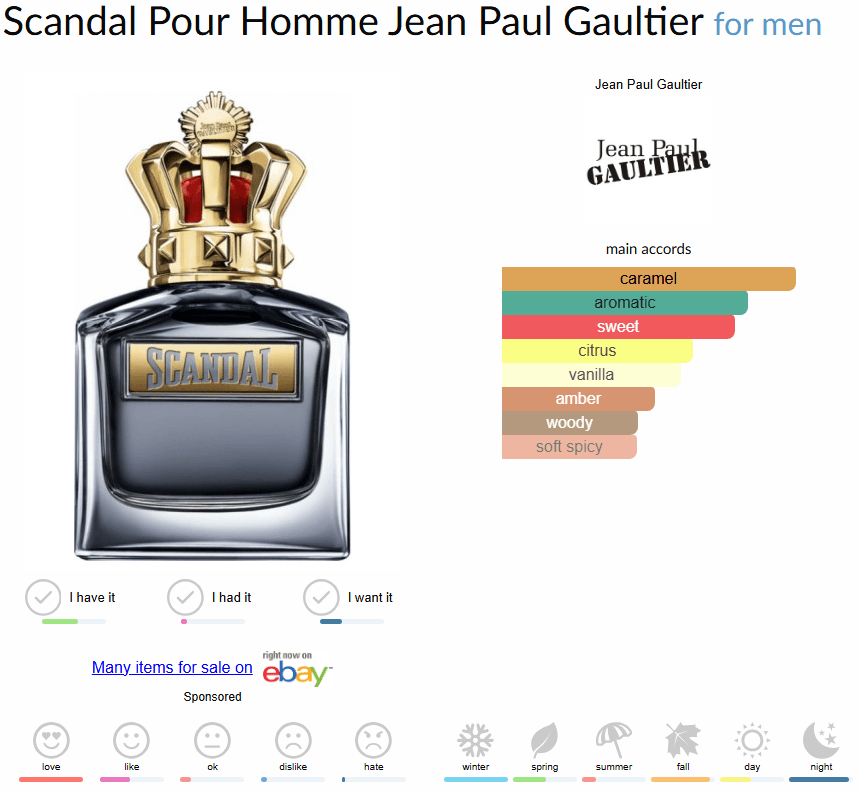
Now you want to go to a party and definitely attract attention? Choose something sweet, expansive, that will let you know you're coming before you're even there, like jean paul gaultier's scandal.
I've provided some examples so that you can see the presence of sweet notes in more relaxed and open environments and citrus and woody notes in more serious or everyday environments. I hope this has helped, fragrances have become an addiction in my life nowadays haha. You only need 2 fragrances to look good, one for your day-to-day life which will be what we call your “signature” and one for parties and environments where your all-rounder doesn't have the necessary impact.
The world of perfumery is huge, and there are many other themes, such as countertypes, which are Arabic replicas and companies that aim to give you an experience similar to a designer perfume for people who don't have the money or simply don't want to spend on that expensive perfume.
There are also niche perfumes, which come from companies that only produce perfumes, but they are VERY expensive, so I don't think it's worth bringing them up, as I think it's better for you to venture into normal perfumes and then move on to them, if you're interested.
All in all, that's it, I hope I've been able to interest you a little in the reality of perfumery, as I said before, smells represent more than just a sense!
JHenckes3/28/2025
CardioPulmonary Resuscitation (CPR):
As I work in the health sector as a doctor, I'd like to give you some basic but extremely comprehensive information on how to act in a cardiac arrest or cardiorespiratory arrest. This topic can save a life, because you don't need to work in the health sector to start CPR and it's essential that the person closest to you knows how to identify and start the maneuvers, so that's what we're going to talk about today!
What is known as CPR or CardioPulmonary Resuscitation is the name given to the initial maneuvers used to resuscitate a person with a stopped heart. They allow the blood from the heart to continue to be pumped and give the victim a chance of having their body function again with fewer sequelae!
And how do I identify cardiac arrest? It can happen acutely/suddenly (the victim will probably lose consciousness after feeling severe pain) or slowly (the heart starts to show signs of weakness until it actually stops, in which case it can take several minutes before the victim needs CPR). In both cases, your first course of action will always be to lay the victim down on a hard floor and check that they are breathing (see if their lungs are moving or if you feel air coming out when you touch your face to their mouth) and check that their heart is beating (the ideal place to check this is by looking at the artery in their neck, but if you can't find it, check by looking at their wrist).
If both signs are not present, you should immediately call or ask someone to call the emergency medical service in your city. Also ask someone to bring the nearest Automated External Defibrillator (AED) while the ambulance doesn't arrive. During this time, you need to promptly begin resuscitation maneuvers, and how do you do that?
CPR consists of placing your hands one on top of the other, resting the bottom of your palm on the middle of the patient's chest (roughly in line with the nipples) and compressing the chest forcefully at a rate of about 2 compressions per second. It is essential that you do this continuously (you can alternate with other people as it is an extremely exhausting process) until the emergency medical service arrives!
When the AED arrives, immediately place it on the patient's chest as instructed by the device itself and follow the audio instructions! This is very important, as the electric shock greatly increases the chance of saving the patient's life.
Believe it or not, thousands of people could be alive if this knowledge were taught and reinforced in schools, workplaces, colleges... Don't let someone dear to you live less than they should for lack of knowledge, we can all help save a life!
NOTE: This is the official sequence of actions we should take in a cardiac arrest, published by the American Hearth Association and followed worldwide in practically every country!
M
MrT3/28/2025
Sound Mixing
One of the things I am passionate about and I do regularly is sound mixing, in particular church on a Sunday although it could relate to mixing sound anywhere. Unlike concerts that have professionals doing the sound, churches will normally use volunteers who aren’t necessarily trained or knowledgeable in what to do. One thing that really annoys me is when I walk into a service and the mixing isn’t good, especially when there are certain instruments or singers that you are unable to hear clearly.
Frequencies
Before you can understand how to mix sound you have to realise that sound can be broken up into frequencies and that certain instruments (including vocals) tend to use certain frequencies but not all of them.
A simple breakdown could look like:
0-20Hz Very Low – Too low to hear
20-60Hz Sub – Sound that would come out your subwoofers. The rumble of a bass drum would fit nicely here but not a lot else
60-250Hz Bass – Bass guitar fits here, need to make sure other instruments aren’t taking it over, ie. the keyboard. However, if there is no bass guitar then the keyboard might be appropriate to add bass to the mix
250-500Hz Lo-Mids – Usually a frequency you want to scoop out a little or avoid as it can make things sound muddy or boxy
500-2kHz Mids – This is where all the other instruments compete, along with the vocalists.
2-4Khz Hi-Mids – Some instruments and vocals may get up here but you need some of it otherwise
4-20Khs Highs – Mostly too high to hear and you may want to dampen some of this on vocals to remove harsh S’s (de-ess)
Equalisation
The way you deal with particular frequencies is through equalisation. It’s just a way of adjusting the difference between each frequency, either on an individual channel or on the mix as a whole. You can boost frequencies that you want and reduce those that you don’t. This is the most powerful tool a sound person has so it’s very important to learn about. You can add other effects and cool stuff but it will all be based on top of what you’ve done (or not done) with equalisation.
Mix with your Ears
It might seem obvious but you need to listen to what the whole mix sounds like and make adjustments from there. It’s easy to look visually at frequencies on a sound desk and make pretty shapes with the EQ but it’s meaningless if the sound is still terrible. Sometimes a good trick is to look away or position yourself somewhere else for a moment so you get a better idea of what it really sounds like.
Vivisector3/26/2025
If there is one thing I could talk about for now, it is the Doom saga. In fact, before I expose you a little knowledge about it, I hope to find other enthusiasts like me on this site. I'll post a photo that was also reposted by one of the creators John Romero and his software house.
Doom is known in the world as a video game with almost no lore, or at most that the anger of the Doom Guy is linked only to the death of his bunny Daisy. Nothing could be more wrong, that event certainly contributed but today the story is so expanded that it makes more sense than one might think.
After the events of Doom 2 and Doom 64, our soldier remains trapped in the underworld, from there on he is found by the UAC who for years traveled between the portals of Mars and the Underworld. Locked in a sarcophagus to contain his fury, the Maykr free him to make him a weapon against the infernal forces. But the Doom Slayer doesn't take orders from anyone and so he goes against everyone, even his own creator. Of course now with the arrival of Dark Ages many other things will be explained but I tried to reduce the story a bit to the essence of the story.
As you can see I'm not only interested in the game, but also in the physical collecting side that led me to read the books. One called Masters of Doom that tells the story of the birth of id Software and everything the creators did at the time. The main inspiration for the demons actually came from Romero's passion for fantasy DnD.
Then there are 4 novels that took inspiration from the game where you could only deduce that our Doom Guy is called Flynn Taggart but the decent story stops at the first two books, after that it becomes almost unreadable and confusing. We also know that he is not alone, that a colleague Arlene Sanders is fighting his same battle and that maybe she could pop up in future chapters of the game (who knows?).
Gentlemen, let's say that maybe it's better if I calm down otherwise this post will become too tedious but if you have any questions about it feel free to leave a comment and I will try to give you clarifications on the matter.